The quick answer
Come between May and early October. Inside that window, June, July, and September give you the best of the town: dry streets, a calm harbour, every restaurant and dive shop open, and sunsets that make the whole waterfront stop and stare. Avoid late January to early March if you can. That is when the west wind arrives, boats sit in port, and half of town takes its annual break.
If your trip is really about the islands (for most people it is), start with our best time to visit Komodo Island guide. It covers seas, snorkel visibility, mantas, and dragons month by month. The short version: the boat season and the town season are the same. This page covers the part that guide skips. What Labuan Bajo itself feels like through the year, when hotels are cheap, and what each season means for the day trips leaving the harbour.
This is a harbour town, so the sea sets the calendar

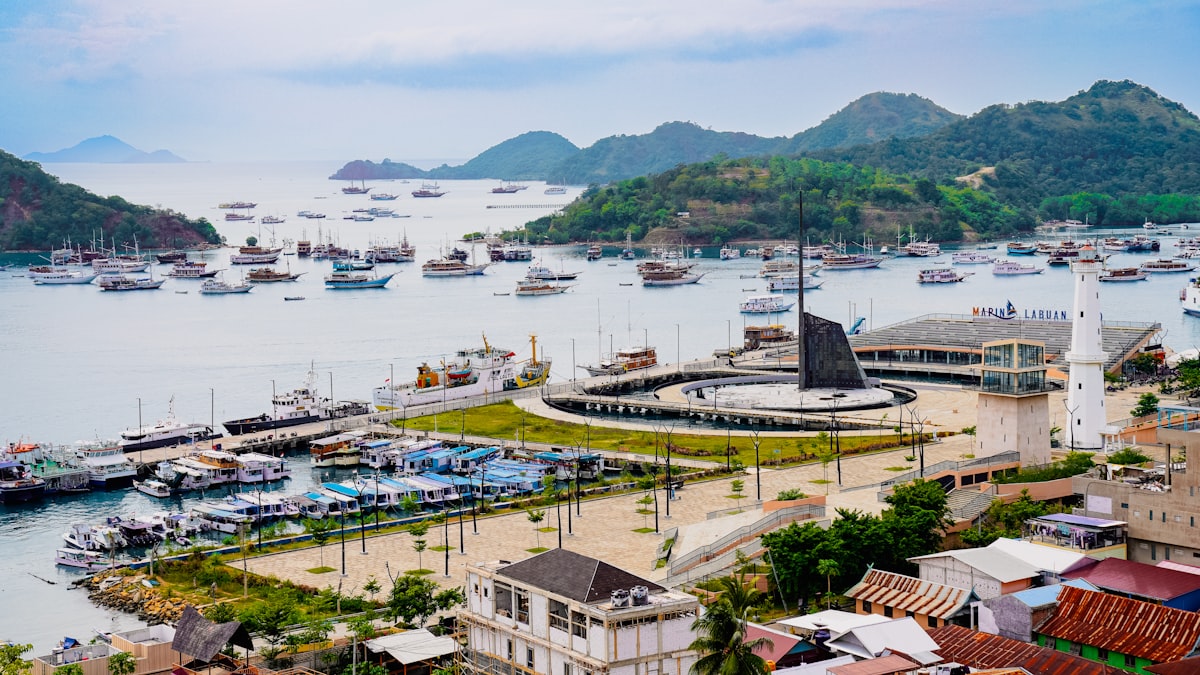
Labuan Bajo has no beach scene of its own and no reason to exist except the water in front of it. The town climbs a hill above a harbour full of phinisi boats, speedboats, and fishing craft. When the sea is calm, the town hums. When the harbour master starts refusing departures, the whole place slows down within a day.
That is why the town's calendar is the boat calendar. Two seasons, nothing complicated.
Dry season, roughly May to October. Hot, dusty, almost no rain. Daytime highs of 30 to 32°C, nights around 22 to 24. The hills behind town turn brown, the air stays clear, and the harbour is glass most mornings. Every business that matters is open and fully staffed.
Wet season, November to March. The hills turn green and the town gets quieter. Rain usually comes in short heavy bursts rather than all-day drizzle, often in the afternoon or overnight. January and February are the wettest and windiest months, and that is when day trips get cancelled and some operators close for maintenance.
When hotels are cheap (and when they are not)
Rough numbers from what we see our guests paying.
August is the expensive month. Rooms run 20 to 40 percent above shoulder rates and the good mid-range places sell out about two months ahead. We wrote up the whole peak-month picture in Labuan Bajo in August.
June, July, and September are high but sane. Book two to four weeks ahead and you will get what you want.
April, May, October, and early November are the value window. Same hotels, 20 to 30 percent less than peak, and you can often book days ahead rather than weeks.
December spikes again around Christmas and New Year, then January to March is the genuine low season. We have seen good rooms at close to half their August price in February. The catch is obvious: you saved on the room and now the boats might not go out.
Restaurants, dive shops, and the rhythm of town
From May through October, everything is open. The waterfront restaurants fill by sunset, the dive shops run two boats a day, and you will need a reservation at the four or five most popular dinner spots in July and August.
November is the wind-down. Still lively, but you will notice shorter menus and quieter streets midweek.
January and February are when town takes its breath. A handful of restaurants close for two to six weeks, some dive shops drop to one boat or stop entirely for annual maintenance, and crews travel home to their villages. Plenty stays open; this is a real working town with a port, schools, and a fishing fleet, not a resort that shutters. But if you arrive in February expecting the buzz from someone's July photos, you will wonder if you landed in the right place.
By late March, things reopen. April feels like a town stretching after a nap.
Sunset season
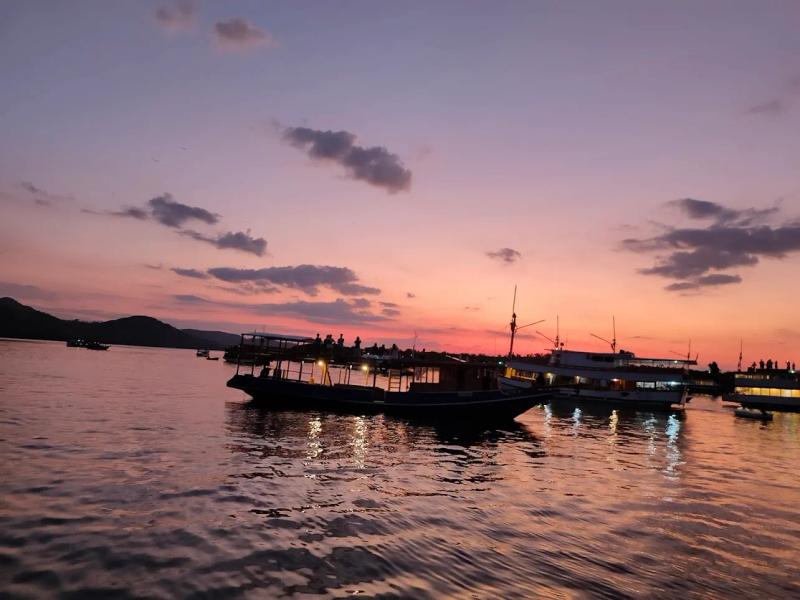
Labuan Bajo's sunsets are the best free show in Flores. The sun drops behind the harbour islands, the phinisi fleet turns to silhouettes, and every rooftop bar on the hill fills up.
The dry season gives you reliability: clear sky, clean orange light, a proper sunset almost every evening from May to October. The wet season gives you drama when it delivers, enormous cloud stacks lit from below, but you might wait through three grey evenings to get one. If sunsets matter to you (they photograph better than almost anything else on the trip), the dry months win.
Wherever you watch from, walk the waterfront first. Our harbour guide covers the piers, the night market, and where the viewpoints are.
Pick the trip that fits
Padar, Pink Beach, dragons and Manta Point by speedboat, back before dinner.
Komodo Day Trip: Speedboat to 6 Top Destinations
Three days on a phinisi with sunrise Padar before the crowds arrive.
Komodo Tour 3 Days 2 Nights: Phinisi Open Trip
The whole boat to yourselves. Your route, your pace, your music.
Komodo 3D2N Private Charter: Whole-Boat Phinisi
What each season means for day trips

This is the practical part. Day trips to Padar, Komodo, and the snorkel sites leave the harbour early in the morning (ours picks you up at 06:30 and sails around 07:00) and cross open water to get there.
From May to October, departures are near-certain. Crossings are smooth, nobody is seasick, and the boats keep their full itineraries. Our Komodo day trip runs on schedule essentially every day in this window.
In November, December, and March, most days are fine but you should build in a buffer. If the forecast turns, boats may swap the itinerary or leave earlier to beat the afternoon wind. Give yourself a spare day so a cancellation becomes an inconvenience rather than a disaster.
In late January and February, plan on losing days. The harbour master will hold boats in port when the west wind peaks, sometimes several days in a row. If your trip is a tight three days in early February, you are gambling the main event. Multi-day boats feel it too. A liveaboard needs a run of decent weather, which is why most people book them between April and early November.
One more town-specific note. Komodo Airport (LBJ) sits right above town and handles weather well, but wet-season afternoon storms occasionally delay or divert flights. In January and February, take a morning flight if you can, and never book a same-day boat connection.
Month by month for the town
| Month | Weather in town | Crowds | Our take |
|---|---|---|---|
| January | Wettest, windy | Very quiet | Cheap, but boats stay in port some days |
| February | Wet, windy early | Very quiet | Lowest prices, biggest gamble |
| March | Storms fading | Quiet | Late March starts to feel good again |
| April | Mostly dry | Light | Value month, town reopening |
| May | Dry, clear | Building | Full services, sane prices |
| June | Dry, hot | Busy | Sweet spot starts |
| July | Bone dry | Very busy | Peak conditions, book ahead |
| August | Bone dry, dusty | Busiest | Superb but crowded and priced up |
| September | Dry, clear | Easing | Our favourite month |
| October | Dry, first clouds | Moderate | Last reliable month, good value |
| November | Transition, some rain | Light | Fine with a buffer day |
| December | Regular rain | Busy at holidays | Christmas surge, weather roulette |
When we would come
September, without much hesitation. The August crowd has flown home, the weather has not budged, hotel prices ease, and the harbour still empties every morning with full boats. June is the runner-up if you want the start-of-season energy.
For value, take late April, May, or October. You keep 90 percent of the dry-season experience and pay shoulder rates.
And if the only time you have is February, come with flexible days, a book, and low expectations for the boat schedule. The green hills are genuinely lovely. Just know what you are trading.
Frequently asked questions
Is the best time for Komodo Island the same as for Labuan Bajo?
Yes. The town and the park share the same weather, so the May to early October window applies to both, with June, July, and September as the sweet spot. The difference is only in what you feel it through: in town it is hotel prices and open restaurants, on the water it is sea state and visibility. Our best time to visit Komodo Island guide covers the boat side in detail.
What is the cheapest month to visit Labuan Bajo?
February, usually. Hotels discount heavily, flights cost less, and town is quiet. You accept a real risk of cancelled boat days in exchange, so it only makes sense if your dates are flexible.
Does it rain all day in the wet season?
Rarely. Most wet-season rain arrives as a heavy burst in the afternoon or overnight, then clears. January and February bring the longest spells and the strong wind that actually stops boats. December and March are much gentler.
Are flights to Labuan Bajo reliable in the wet season?
Mostly, yes. Komodo Airport operates year-round and cancellations are uncommon. Afternoon storms in January and February can cause delays or the odd diversion, so book morning flights in those months and give yourself a buffer day before any boat departure.
How many days should I stay in town?
Three to four nights covers it for most people: one day trip, one rest or sunset day, and a buffer. Add more if you are diving or heading inland to Wae Rebo. In the wet season, add at least one extra day as weather insurance.