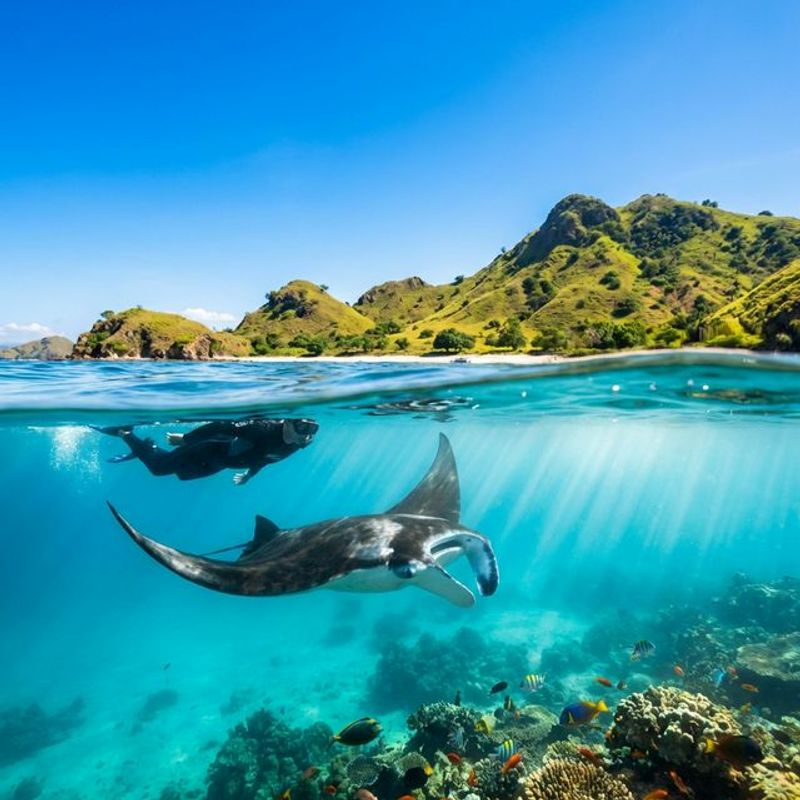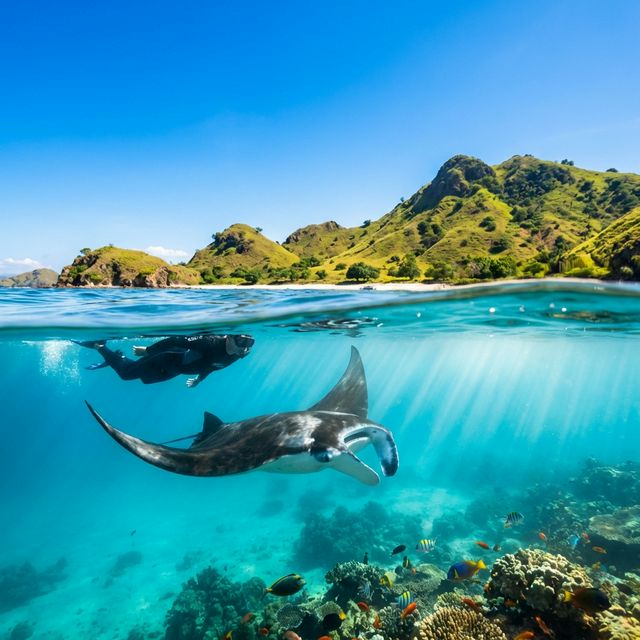
Most people first hear about Labuan Bajo sometime around the third day of a Bali trip, usually from another traveler nursing a Bintang who says something like "you have to see the dragons." And they're not wrong. Labuan Bajo is the main gateway for Komodo National Park, a UNESCO-listed stretch of islands on the western tip of Flores where prehistoric-looking reptiles still roam, the diving is some of the best on the planet, and the sunsets make grown adults stop mid-sentence.
The catch is the town itself. It's a rough, half-built little harbor that's still figuring itself out. If you land expecting Bali, the confusion will hit fast. There's almost no beach, overpriced restaurants line the main strip, parts of it smell like a fishery. And yet, spend a couple of days here and something clicks. The rawness of it is half the appeal. This guide will help you get the most out of Labuan Bajo Indonesia without spending three days questioning your travel choices.
How to get to Labuan Bajo
From Bali, just fly. Citilink, NAM Air, and Batik Air all run daily flights, the journey is about 75 minutes, and you're looking at $40 to $120 one way. If you're visiting during the dry season (May through September), book early. Prices have a habit of doubling once the seats thin out.
From Lombok, it gets more complicated. Direct flights exist but they don't run every day. There's technically a ferry option too, but calling it a journey is being generous with multiple stops, unpredictable schedules, and an overnight crossing is more of an endurance event than a transit choice.
Already on Flores Island? Driving from Bajawa or Ruteng takes a full day. The roads are actually decent now, though the mountain switchbacks through the interior will test anyone with even a hint of car sickness. Transnusa also runs direct connections from Kupang, Ende, and Mataram, but check the schedule close to your departure date since routes quietly disappear between seasons.
P.S Since you’re exploring the area, you absolutely have to check out Paisu Pok Lake! It’s a stunning hidden gem in Central Sulawesi’s Banggai Islands that’s definitely worth adding to your itinerary.
Things to do in Labuan Bajo
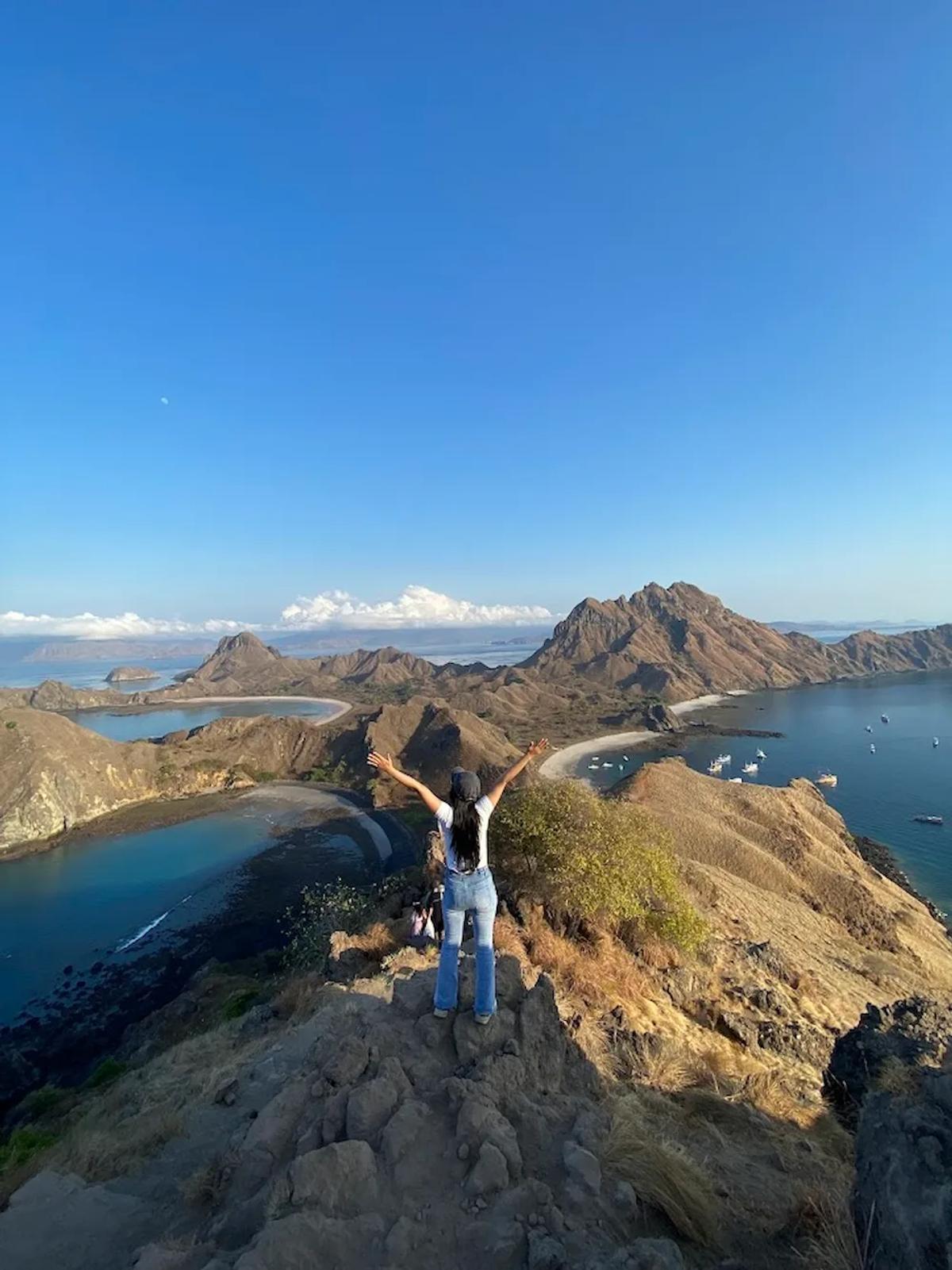
Komodo National Park
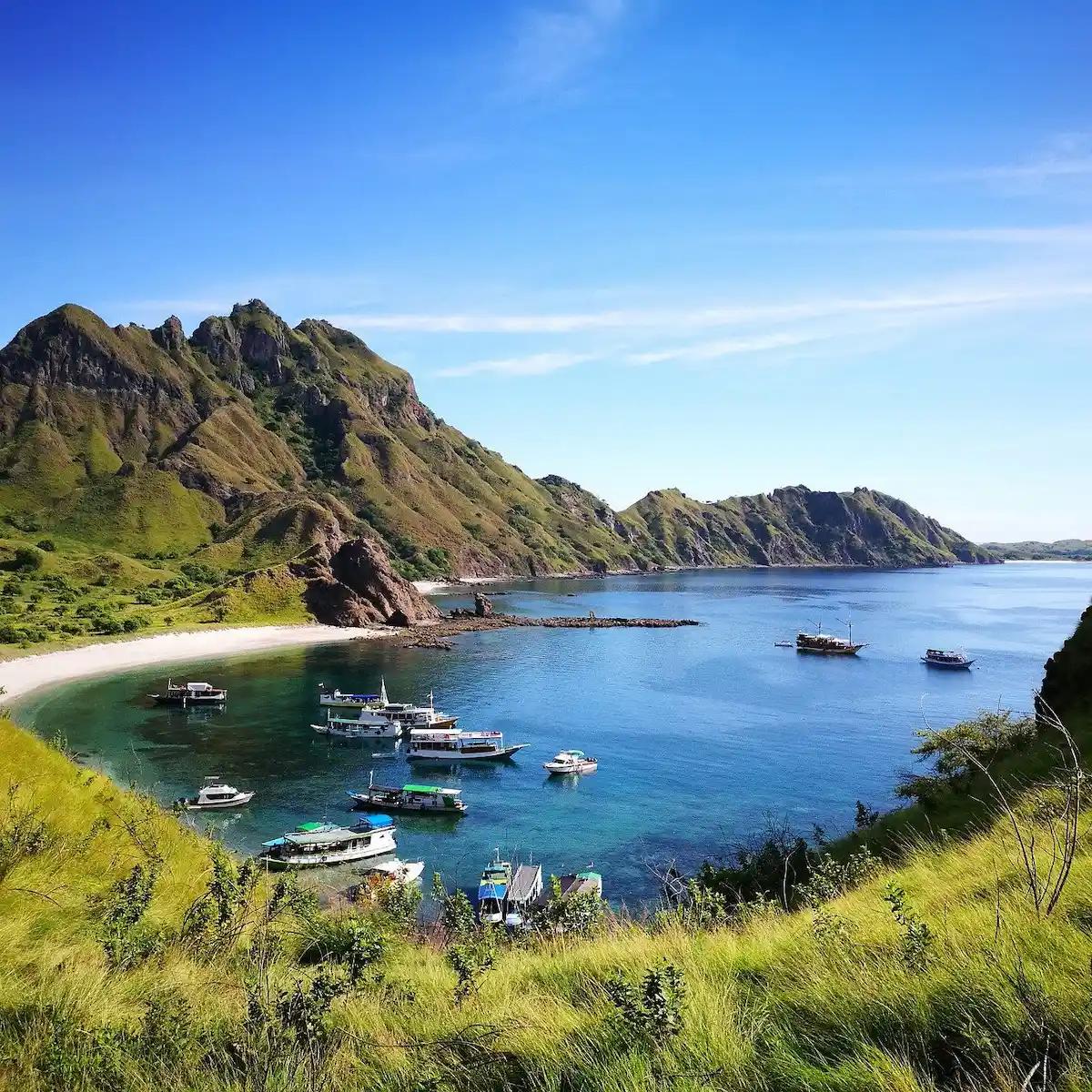
This is why you came. Nobody passes through Labuan Bajo without hitting the park, and the boats know it. Day trips typically run $80 to $200 per person depending on the vessel, what's included, and whether they actually remember to serve lunch. Most packages throw in a stop at Padar Island (the one with the iconic viewpoint you've definitely seen on Instagram) and the pink beach.
A few things worth knowing before you go. Park entrance fees for foreigners are currently around 400,000 IDR ($25), and they've gone up steadily each year, so budget a little buffer. The government also began periodic closures of Komodo Island in 2025 for conservation, and those closures are ongoing still in 2026 (as of March) so confirming your operator's schedule before booking is worth five minutes of your time.
There are also reports that rangers occasionally feed the dragons to keep them stationary and photogenic for tourist groups. Whether that bothers you is your call. What I'll say is that during peak months, the viewing areas can feel less like stumbling onto wild nature and more like a really anxious queue at a wildlife exhibit. If that's not your version of a good time, consider Rinca Island instead. Just as many dragons, significantly fewer elbows.
Diving (and why liveaboards are worth it)
The diving around Labuan Bajo is some of the best you'll find anywhere. Not "best in Southeast Asia" good. Actually world-class. The kind of diving that makes you slightly depressed about every future dive you'll ever do somewhere less remarkable.
Manta Point is the headline act, but mantas are wild animals and they haven't read your itinerary. Plenty of divers have sat at Manta Point two days in a row and seen nothing, then had three giant oceanic mantas cruise past on an unrelated reef dive the next morning. That's just how it goes, and honestly that unpredictability is part of what makes it special.
If diving is your main reason for coming, book a liveaboard. A 3 night trip on a boat like Manta Rhei gets you to remote sites that day-trip boats can't reach, you're in the water before the crowds arrive, and you skip the daily back and forth to town. Every serious diver I've spoken to who did a liveaboard here says the same thing: they wouldn't stay on land again.
You can get Open Water certified in town through shops like Uber Scuba. The courses are solid. Just know that the best sites, including the manta dives, go below 60 feet. If you're brand new, you'll still have a great time and you'll just see the marquee stuff properly on your next trip.
Pink beach and the beaches around Labuan Bajo
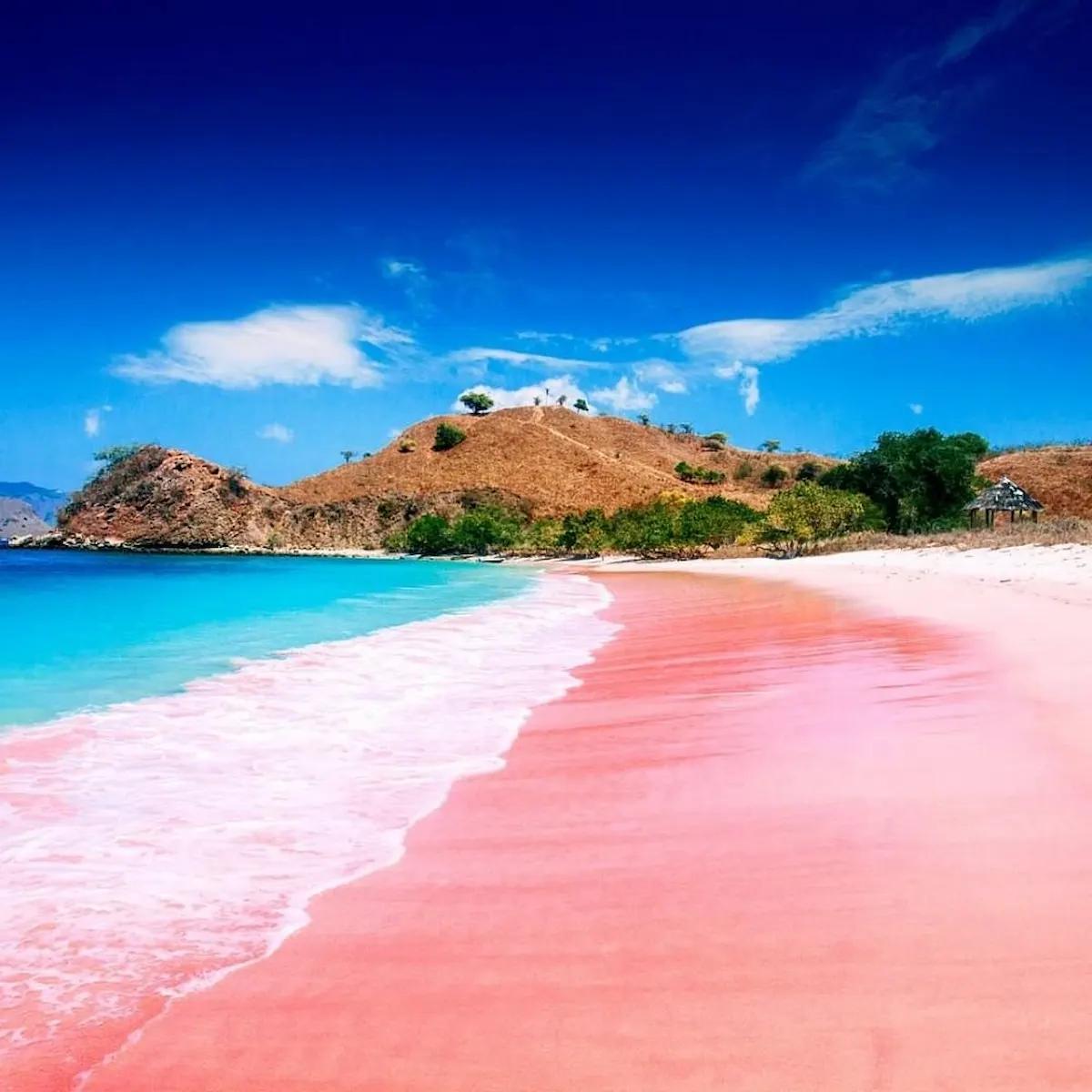
Pink Beach deserves its reputation. The sand really does have that reddish-pink tint from crushed coral mixed in, and the water is clear and calm. It's only reachable by boat, but it fits naturally into any Komodo day trip.
Now, the beach situation in town itself. There isn't one. Not really. The main public stretch near Labuan Bajo has a consistent litter problem that nobody seems to be solving. The one other promising section of shoreline got absorbed by a luxury Marriott resort, which means the beach access that locals used to enjoy is now behind a private fence. The remaining coastline is mostly muddy fishing ground that smells exactly how you'd imagine it does.
If you're coming from Bali expecting to walk five minutes and be in the ocean - recalibrate that expectation now… All the good swimming happens off boats or on nearby islands. Plan around it and you'll be fine.
Rangko Cave
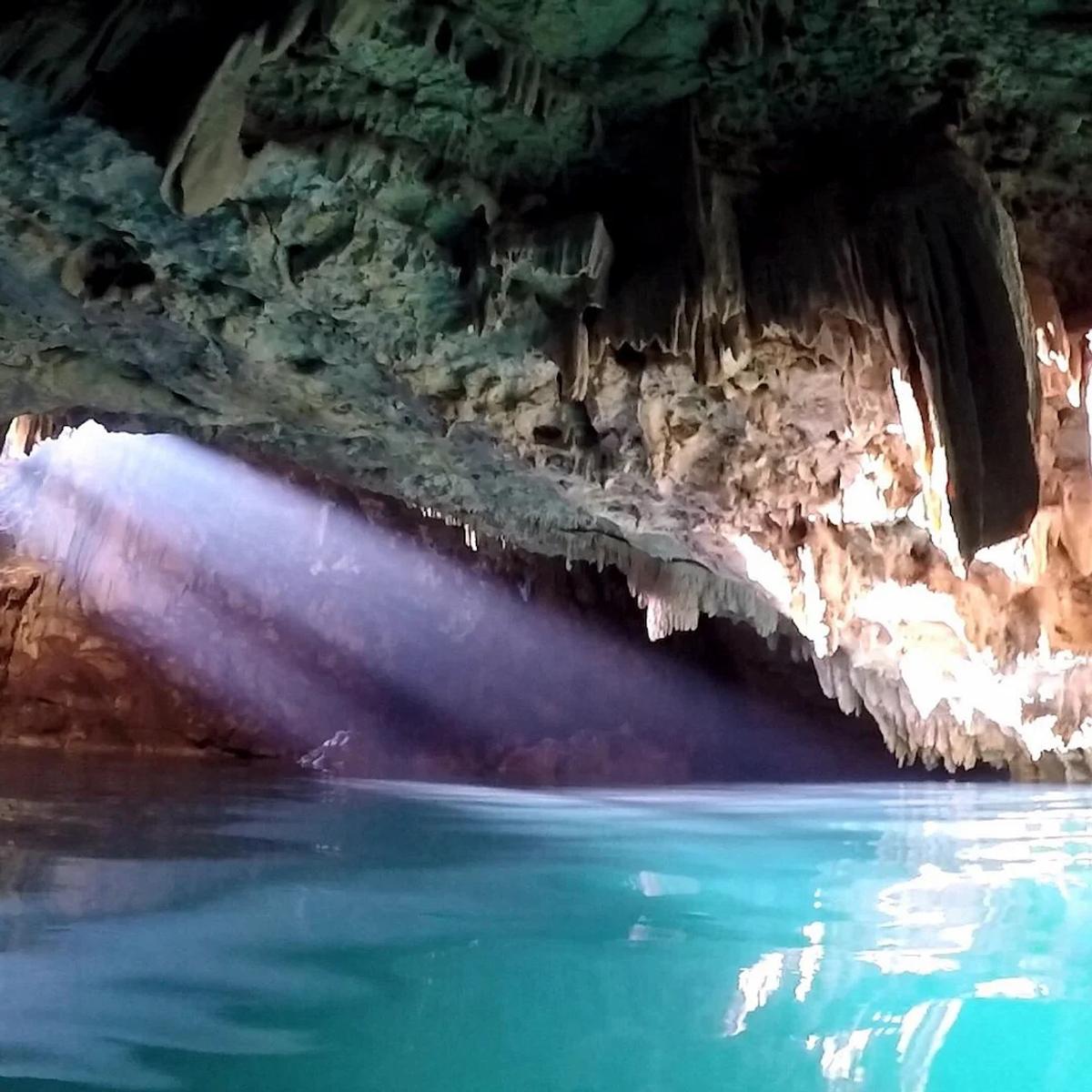
About 40 minutes from town by car, then a short boat ride across a calm bay. Inside, there's a natural pool lit from above through gaps in the rock. Hit it at the right time of day and the water turns a deep, almost electric blue. It's one of those experiences that sounds overhyped until you're actually floating inside a glowing cave and you get it immediately. A solid half-day trip, and a decent consolation prize for the town's beach situation.
Mirror Cave (Goa Batu Cermin)
Only four kilometres outside town. A Dutch archaeologist discovered it in 1951 and named it well, locals named it : Goa Batu Cermin, which translates to "Stone Mirror Cave." The reflective stones in the walls catch and scatter light in a way that's hard to describe but genuinely impressive in person. Give it an hour, pair it with a coffee and a wander around town, and you've got a solid low-key morning sorted before any afternoon boat trip.
Walking around town
Labuan Bajo has actual sidewalks. This sounds like a minor detail until you've spent a few weeks in parts of Southeast Asia where walking on a footpath is more of an obstacle course than a stroll. Here they're maintained, mostly clear, and you can actually use them. The main drag, Soekarno Hatta road, is lined with cafes, dive shops, and restaurants that feel surprisingly western and polished.
That polish only extends so far, though. Walk a couple of blocks inland and you're straight into the construction chaos with half-built walls, rubble, scaffolding, and litter. Labuan Bajo is one of Indonesia's official Five Super Priority Destinations, which means serious government money is flowing in. The finished product just isn't here yet. Think of it as visiting mid-renovation.
Sunsets
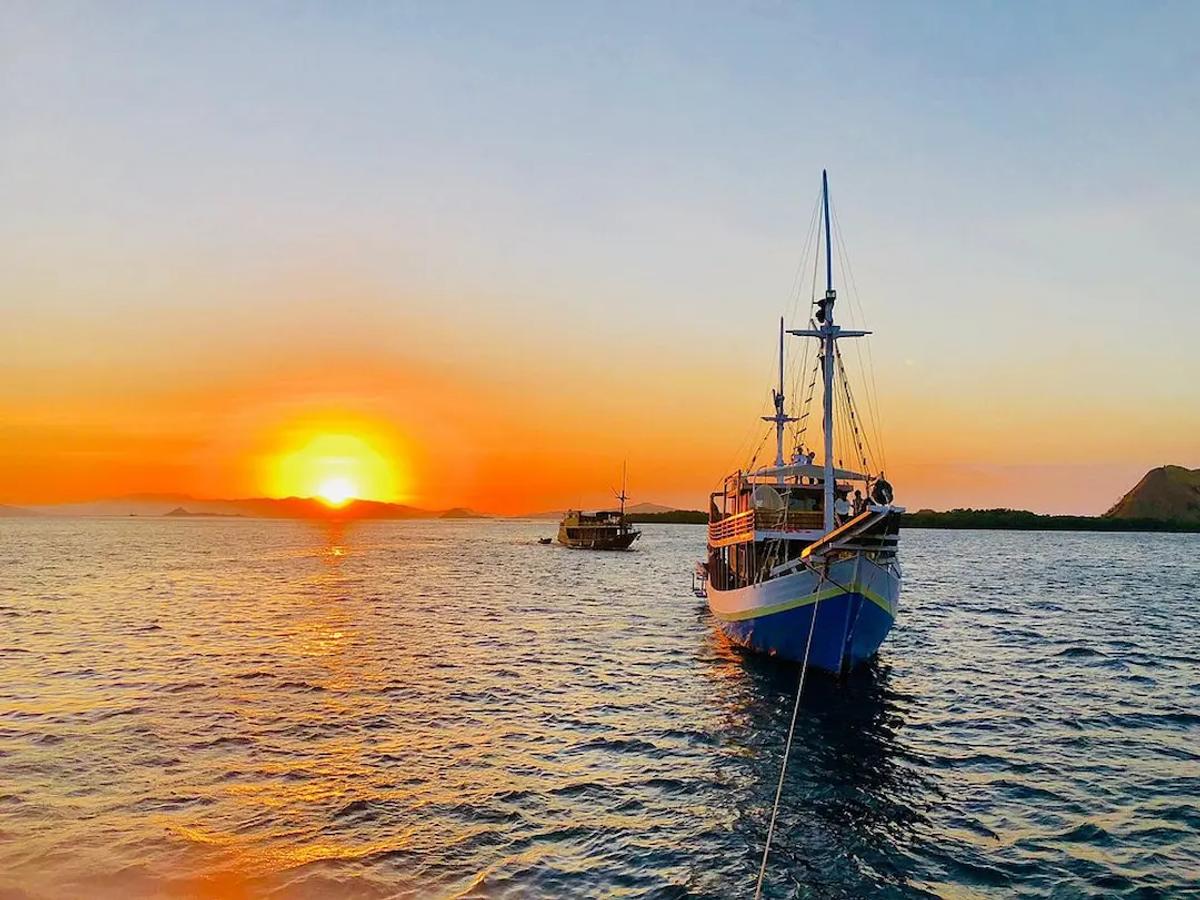
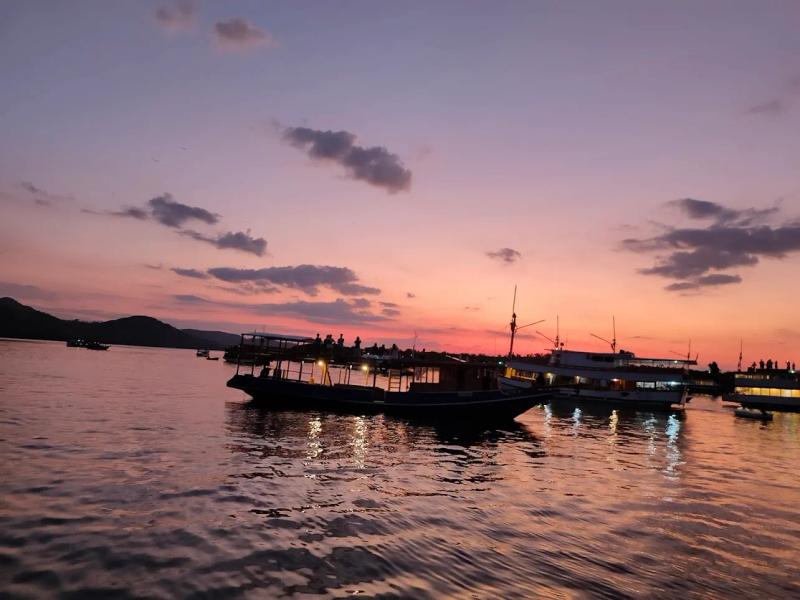
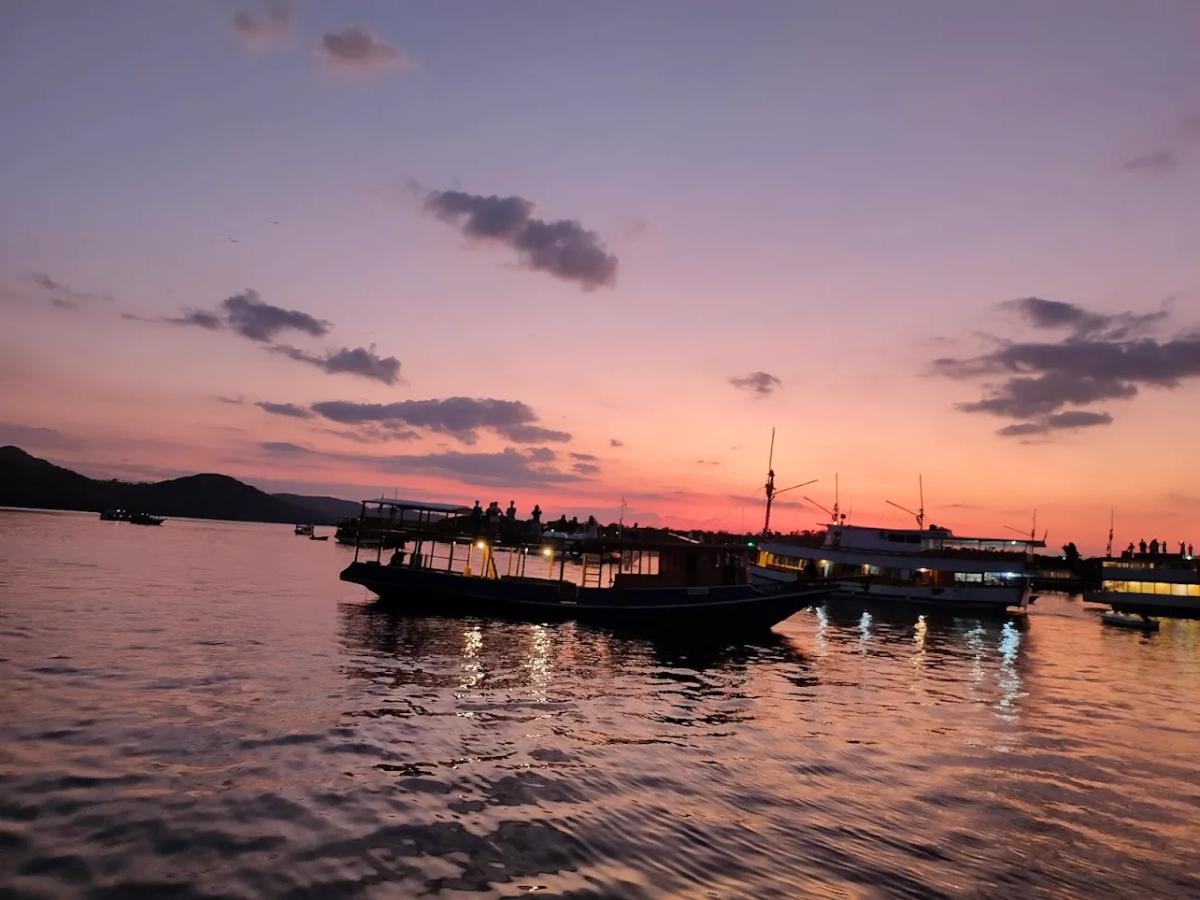
This town takes its sunsets seriously, and with good reason. The light over the islands and the harbor at dusk is genuinely spectacular. Bukit Cinta, Puncak Amelia, and Puncak Silvia are all viewpoints within easy scooter distance, and you can loop through all three in a single afternoon. The roads out there are smooth, the scenery on the way is good, and even if the clouds let you down at golden hour, the ride itself is worth the 50,000 IDR scooter rental.
Where to stay in Labuan Bajo
The accommodation here is essentially binary: cheap guesthouses or expensive resorts, with very little in between. That comfortable mid-range bracket you find all over Bali - the kind of place with a small pool, a good breakfast spread, locally-run and genuinely personal hasn't made it to Labuan Bajo yet. Maybe give it a few years.
If budget is the priority, $15 to $30 a night gets you a clean, functional room near the main strip. Wi-Fi will be there, technically. Whether it functions well is a different matter.
The higher-end resorts are pricey, and several of them have that oddly hermetic quality where you check in, eat resort food, and barely interact with the actual town at all. One resort controversially enclosed what used to be a public beach, which hasn't earned it many fans locally. And if you're wondering why there are almost no hotels with pools, it's because all fresh water in Labuan Bajo is trucked in. A pool is a significant luxury when your water supply arrives by the truckload.
If swimming in the ocean matters to you, look at rooms on Bidadari or Seraya, two small islands just off the coast. You give up easy access to the restaurants and dive shops in town, but you gain actual water access from your doorstep.
Pick the trip that fits
If you decide it is worth it, the next question is boat or no boat. These are the three trips we actually run, with real prices.
Padar, Pink Beach, dragons and Manta Point by speedboat, back before dinner.
Komodo Day Trip: Speedboat to 6 Top Destinations
Three days on a phinisi with sunrise Padar before the crowds arrive.
Komodo 3D2N Open Trip: Phinisi Liveaboard
The whole boat to yourselves. Your route, your pace, your music.
Komodo 3D2N Private Charter: Whole-Boat Phinisi
And if you're here to dive, just book a liveaboard. I know I keep saying this, but it really is the move. Everything from your bed, your meals, your dive equipment is on one boat. Divers who do it this way almost universally say they wouldn't stay on land again.
Best time to visit Labuan Bajo
May through September is the sweet spot. Calm seas, excellent dive visibility, next to no rain. The dry season technically runs April through November, but that May to September window is when everything lines up best.
December through March is rainy season. Prices drop and the crowds thin out, but you're rolling the dice on your whole itinerary. Rough water grounds the day boats regularly, and some dive sites close entirely. The consolation is real though as the parched hillsides turn green almost overnight after the first rains, and the dramatic cloud formations can make the evening light genuinely extraordinary.
July and August are peak tourist season and you'll feel every bit of it. Boats book out weeks in advance, the dragon viewing areas get crowded, and everything costs more. If you can be flexible, aim for April, May, or September for good weather, without the chaos.
One thing that doesn't change regardless of timing: it's always hot and humid. Temperatures sit around 26 to 32°C (79 to 90°F) year-round. Pack clothes that breathe and don't forget reef-safe sunscreen, both for yourself and the coral.
What does Labuan Bajo actually cost?
More than a small town on Flores probably should. The tourist strip charges Bali-level prices for food that doesn't always deliver Bali-level quality. A warung two streets back from the waterfront will serve you roughly the same food for half the price, and the portions are usually better. Overcharging is a known issue here where tour operators and waterfront restaurants are the consistent culprits. It helps to ask around and compare prices before committing.
On a tight budget, $30 to $50 USD a day is workable. That gets you a basic guesthouse, warung meals, and a scooter rental. You won't be doing much else on that, and the park trip will blow it out.
Most visitors end up spending $80 to $150 a day once you factor in a decent room, restaurant dinners, and the Komodo day trip. That day trip is the single biggest expense for most people with boats start around $80 per person and climb from there depending on the operator and boat quality.
If you're after a resort stay or a liveaboard diving trip, clear $200 a day at minimum. Multi-day liveaboards run $300 on the low end to well over $800 for the better boats.
Labuan Bajo vs Bali

Indonesia's tourism board loves pitching Labuan Bajo as the "new Bali." It is not the new Bali. Bali has spent about forty years building the kind of tourism infrastructure that makes it work, the beach clubs, the restaurant density, the surfboard rentals on every corner, the surprisingly decent Wi-Fi. Labuan Bajo has a single main road and a water supply delivered by truck.
Comparing them isn't really fair to either place. What Labuan Bajo does offer is something Bali traded away a while ago: actual wildness. The diving is in a genuinely different league. The Komodo experience doesn't exist anywhere else on earth. And even during the busiest weeks of the year, the crowds here are a fraction of what you encounter in Canggu on a random Tuesday.
People who leave disappointed almost always arrived expecting Bali. The ones who love it showed up knowing they were coming somewhere rougher, more remote, and less polished and embraced it.
What to know before you go
Two full days is enough for most non-divers. One on a Komodo boat, one for the caves and viewpoints. If you're here for a liveaboard, add that on top. But if you've booked five nights in town and you're not a dedicated diver, you may find yourself staring at your hotel ceiling by day three.
Some parts of town smell intensely of drying fish. Not constantly, and not everywhere, but the wind shifts and it finds you. Just setting expectations.
Rent a scooter for at least one afternoon. The inland roads are in good shape, the views outside town are excellent, and it's a much better way to explore than sitting in the back of a taxi.
Bring cash, and more of it than you think you need. The ATMs here are unreliable while some run out, some just refuse foreign cards for no apparent reason and many boat operators are cash-only. Don't assume you can sort it when you land.
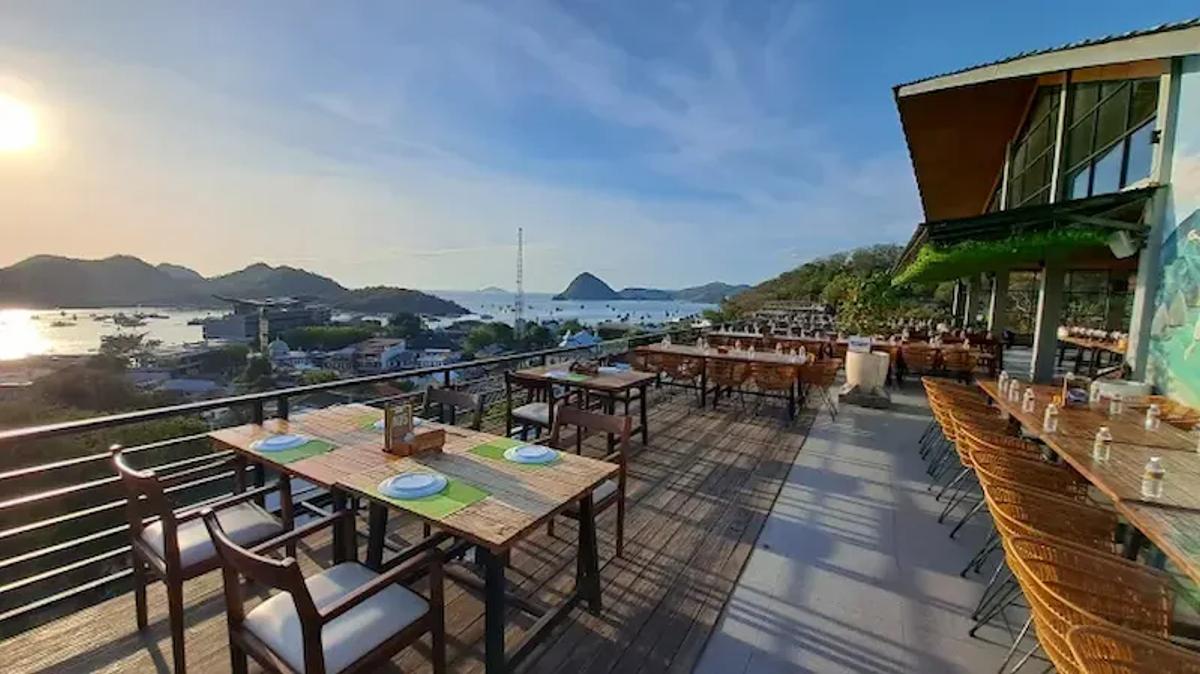
For dinner in town, Happy Banana and Le Bajo are the two most consistently recommended spots. For something cheaper and more local, Kampung Ujung has a food center that's worth heading to at least once.
Download Google Translate and save it offline before you fly. English is plentiful on the tourist strip and disappears almost completely everywhere else.
Finally: don't drink the tap water. All fresh water in Labuan Bajo arrives by truck and goes into large tanks. None of it is filtered. Stick to sealed bottles as they're everywhere and cheap.
Frequently asked questions about Labuan Bajo
Is Labuan Bajo worth visiting?
Yes, with realistic expectations. If you're after beach clubs, decent Wi-Fi, and cold beer on the sand, you'll be frustrated. If you want to see Komodo dragons actually roaming wild, do exceptional diving, and watch a harbor sunset that makes Bali look like it's not even trying, absolutely go.
How many days do you need in Labuan Bajo?
Two to three days is the right amount for most people. One day for a Komodo boat trip (non-negotiable), one day for caves and viewpoints, and a third if you want to slow down and soak it in. If you're not diving every day, five nights will feel like a stretch.
How do you get from Bali to Labuan Bajo?
Fly. Citilink, NAM Air, and Batik Air all run the route daily, it takes about 75 minutes, and fares sit between $40 and $120 one way. The ferry exists if you have a lot of time and low standards for comfort. Most people fly.
Is Labuan Bajo safe for solo travelers?
Generally, yes. Violent crime against tourists is rare. The thing to watch out for is overcharging restaurants near the waterfront, tour operators, and some dive shops have a reputation for quoting tourist prices that don't hold up to scrutiny. Pay attention and push back a little.
Can you swim at the beaches in Labuan Bajo?
Not really, no. The town's public shoreline is muddy and often littered. The nearest decent stretch of sand was privatized by a resort. For actual swimming, you need a boat out to the surrounding islands like Kanawa Island or Pink Beach. All the good water is accessed by sea.
What's the best dive shop in Labuan Bajo?
Uber Scuba comes up consistently as organized, well-staffed, and reliable. But for serious diving, a liveaboard beats any shop. You get better sites, you're at the water at first light, and you don't waste an hour commuting each day. Worth the extra cost if diving is why you're here.
How much does a Komodo Island trip cost?
Day trips typically run $80 to $200 per person, depending on the boat and what's included. On top of that, you'll pay the national park entrance fee in cash which is currently around 400,000 IDR ($25). Multi-day liveaboards that include Komodo stops start around $300 and go well beyond $800 for premium boats.
When should you avoid visiting Labuan Bajo?
December through February is the rainy season, and rough seas cancel a lot of boat trips. July and August bring peak crowds and premium prices. The best months for good weather, manageable crowds, reasonable boat availability are April, May, September, and October.